Light Duty Cleaning Aftertreatment Service
-
Receiving & Inspection
Upon arrival, your light-duty pickup truck DPF is thoroughly inspected for overall condition, external damage, and identifying information. The filter is documented and entered into our tracking system to ensure complete service records and accurate process tracking.
-
Initial Testing
The DPF is weighed and flow tested to establish baseline performance data before service begins. These measurements are recorded to determine the level of restriction and verify cleaning effectiveness after completion.
-
DPF Disassembly & Preparation
Due to the extended design and integrated construction of many light-duty pickup truck DPF assemblies, the filter may require precision cutting to access the internal substrate. The unit is carefully opened using controlled methods to preserve the filter housing and prepare the substrate for deep cleaning.
-
Initial Pneumatic Cleaning
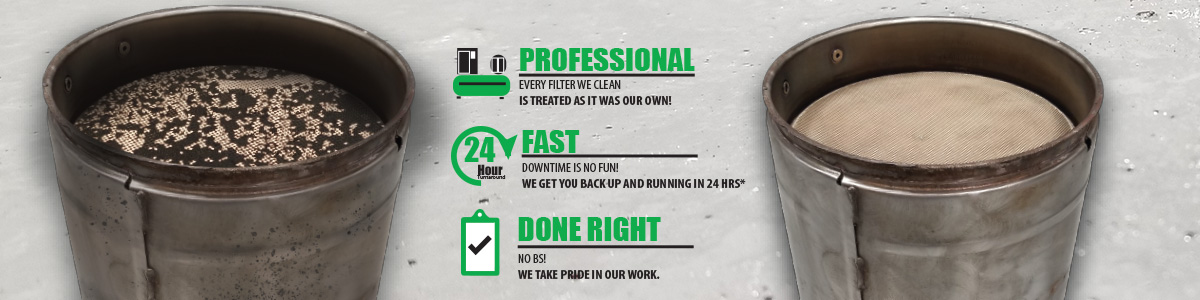
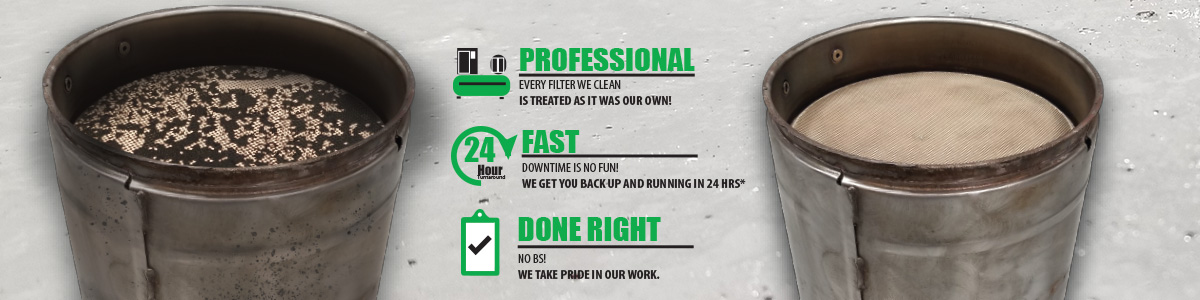
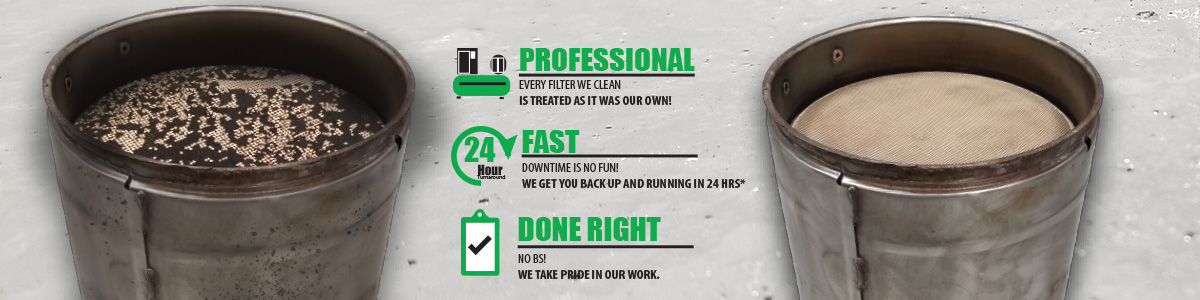
The exposed DPF substrate undergoes an initial pneumatic cleaning process to remove loose soot, ash, and particulate buildup. This step clears surface contaminants and prepares the filter for the Hydro Cleaning process.
-
Pressurized Hydro Cleaning
Our specialized Hydro Cleaning process uses controlled, pressurized water to safely remove trapped ash and contaminants from deep within the DPF substrate. This process restores airflow while maintaining the integrity of the filter material.
-
Thermal Regeneration
The DPF substrate is subjected to a controlled thermal regeneration cycle to eliminate remaining soot deposits and convert hardened contaminants into ash for easier removal. This step enhances the effectiveness of the final cleaning stages.
-
Final Pneumatic Cleaning
After thermal regeneration, the substrate receives a final pneumatic cleaning to remove remaining ash and debris released during the cleaning cycle. This ensures maximum airflow recovery and improved filter efficiency.
-
Final Testing
The cleaned DPF substrate is weighed and flow tested again to verify cleaning performance. Results are compared with initial testing data to document soot and ash removal and confirm restored airflow.
-
DPF Reassembly & Welding
After cleaning and inspection, the DPF housing is professionally reassembled using welding to restore the original configuration. Welds are inspected to ensure proper fitment, structural integrity, and leak-free operation.
-
Final Inspection & Quality Verification
A comprehensive final inspection is performed to verify the completed repair meets quality standards. Any additional repairs, including sensor bung replacement, flange repair, or other aftertreatment repairs, are completed before the DPF is externally cleaned and prepared for reinstallation.